Four Panels, Endless Room: Why Britain’s Plainest Door Still Does the Most Work

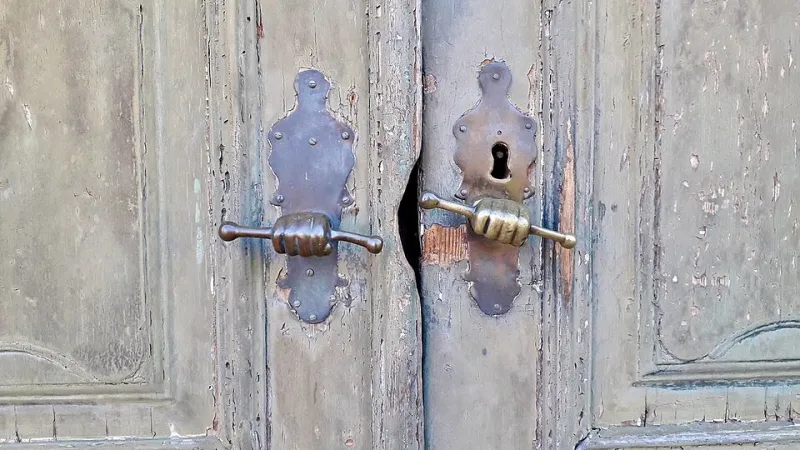
Photo: Portuguese 15th Century, Public domain, via Wikimedia Commons
Every few years, the interior world falls for a door with a bit of drama. Right now it is fluted glass, reeded panels and cottage-style ledges and braces. They photograph beautifully, and I understand the appeal. But walk through any British street and the door doing the quietest, hardest work is usually the plain four-panel: two rectangular panels over two shorter ones, often painted the same colour as the wall, with a simple brass knob.
The case for boring, done well
The four-panel door is not fashionable in the way a fluted glass door is fashionable. That is exactly why it works. It has enough detail to stop a wall looking flat, but not so much that it fights the room. It suits Victorian terraces, Edwardian semis, 1930s semis and plenty of post-war houses. It can look traditional with beading and a ceramic knob, or surprisingly modern with flat panels, no beading and a slim lever handle.
The mistake is assuming that all four-panel doors are the same. A cheap hollow moulded door with shallow pressed panels looks thin and dated. A solid-core or engineered door with crisp shadow lines looks calm and considered. The difference is not the panel count; it is the depth, the weight and the paint finish.
Four-panel vs Shaker
Shaker doors have had a long run for good reason. Their clean, flat recessed panel is easy to live with, and they suit modern kitchens and extensions. But Shaker can also feel a bit blank. In a period house, a full run of Shaker doors can look like a show home rather than a home. Four-panel doors have more rhythm. The horizontal rail between the upper and lower panels gives the eye something to read, and the proportions can be adjusted to suit tall or short openings.
Where Shaker wins is in very small, very modern rooms. If you want the door to disappear into a minimal scheme, a flat Shaker or even a flush door is cleaner. Four-panel doors are not invisible. They are quietly present.
Ledge-and-brace and glazed styles
Ledge-and-brace doors are the cottage classic: vertical boards, horizontal ledges and a diagonal brace. They are brilliant in a stone cottage or a converted barn, but in a suburban semi they can look like fancy dress. They also collect dust on the ledges and can be draughty if not well made.
Glazed doors, especially fluted or reeded glass, are the current darling. They borrow light and add texture, which is genuinely useful in dark hallways and downstairs loos. But they are less private, harder to clean, and can look repetitive if you fit them everywhere. A four-panel door gives you solidity and sound insulation without closing a room down completely.
Paint is the whole game
A four-panel door can look Georgian, farmhouse, coastal or contemporary depending on the paint. Off-white and bone are safe, but they can also look like a rental. Try a soft sage, a clay pink, a muted olive or a deep blue-black in a hallway. Painting the door the same colour as the walls makes the panels read as texture rather than decoration, which is a clever trick in small rooms. Painting the panels a different colour is bolder, but it can look busy; if you try it, keep the trim simple.
Finish matters as much as colour. A satin or eggshell finish is more forgiving than gloss on older doors, and it shows fewer brush marks. If the door is pine, use a stain-blocking primer or the knots will bleed through within a year.
Hardware: less is more
Four-panel doors do not need much. A simple brass or bronze knob, a plain escutcheon and good-quality hinges will do more than an ornate handle. Black ironware suits cottages and rustic schemes; polished nickel or chrome feels more contemporary. Avoid oversized handles on narrow doors, and keep the spindle length right so the knob sits flush. If you are replacing hardware, check the backset and the latch type before you buy; old doors often have unusual mortises.
Where four-panel doors fall flat
They are not universal. In a very small, very modern flat, a four-panel door can feel fussy, especially if the panels are heavily moulded. In a room with patterned wallpaper, a busy door adds another layer of pattern. And in a house where every door is a different style, adding four-panel doors will not magically create cohesion.
They also need decent proportions. A four-panel door in a narrow, tall opening can look stretched; a four-panel door in a wide, low opening can look squat. If you are ordering new, ask for the panel proportions to be adjusted rather than accepting a standard layout.
The quiet winner
The four-panel door is not the most exciting door you can buy. That is the point. It is adaptable, familiar and capable of looking either traditional or modern depending on paint and hardware. In a country that loves a trend, there is something refreshing about a door that simply gets on with the job.