The £60 Makeover: Small Door Hardware Changes That Reshape a Room
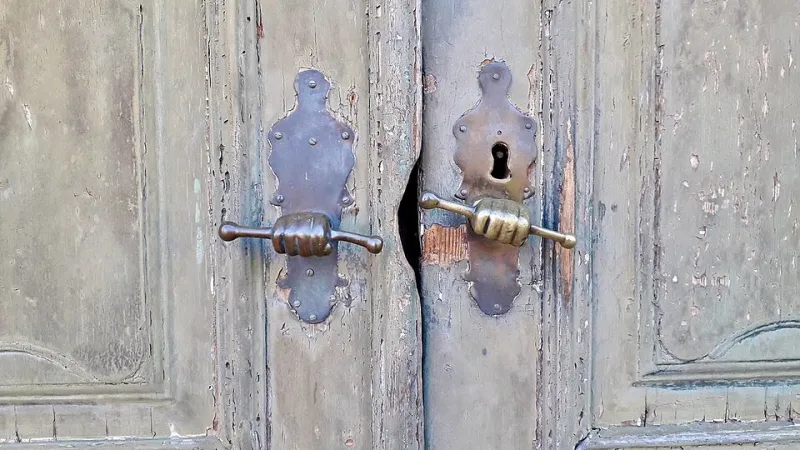
Photo: Ciara Ní Riain, CC BY-SA 4.0, via Wikimedia Commons
New doors are expensive, disruptive and usually a two-week job with a skip on the drive. Swapping the hardware takes an afternoon, costs less than a takeaway for four, and somehow makes the whole house feel considered.
If you've ever stayed somewhere lovely and couldn't work out why, it's often this: the handles felt good, the doors closed quietly, nothing rattled. Here's how to get that at home without touching the door leaves themselves.
Start with the handle, because everyone touches it
The handle is the handshake of a house. A cheap, hollow lever with a loose spring tells your fingers one thing; a solid, weighty one tells them something entirely different.
Lever-on-rose handles are the safe modern choice and suit almost any interior. Lever-on-backplate reads a little more traditional and can hide a multitude of sins, including slightly scruffy old screw holes. If your doors are original and you're in a period property, a simple brass lever with a plain backplate will look like it belongs there in a way that a chunky square bar handle never will.
Two practical notes. Check your latch backset first — 44mm and 57mm are the common UK sizes, and a handle designed for one won't always cover the hole left by the other. And buy one handle before you buy eight; weight in the hand is impossible to judge from a product photograph.
Hinges: dull, invisible and quietly decisive
Nobody notices a hinge until it squeaks, sags or turns a beautiful door into a brown door with gold bits on it.
Matching hinge finish to handle finish is the single easiest upgrade in this article. It sounds fussy. It isn't — mismatched metals are the reason a hallway feels slightly unresolved and you can't say why. If you're going dark, matte black butt hinges look superb against a painted door. If you're going warm, antique brass or unlacquered brass will age with the house instead of against it.
Size matters too. A 76mm hinge suits a light internal door; heavier or taller doors want 102mm, and three hinges rather than two if the door is solid or draught-sealed. If the door is a fire door, you need hinges tested for the job, plus intumescent pads — this is not the place to save four pounds.
Latches, catches and the end of the slam
A tubular latch is the standard mechanism, but the humble magnetic catch is the upgrade nobody talks about. Instead of a metal tongue clicking into a strike plate, a magnet holds the door with a soft, expensive-sounding shut. Fitting one is a ten-minute job if the existing latch comes out cleanly.
For doors that only need to stay put rather than lock — a sitting room, a study, a cupboard under the stairs — a roller catch will do the work without the noise. Budget around £5–£15 per door for any of these, which makes it one of the best value swaps on the list.
Door stops, and the cheapest repair you'll ever avoid
A door that swings into a wall will eventually remove a chunk of plaster. A wall-mounted or floor-mounted stop costs a few pounds and prevents a repair that costs a hundred.
Choose the type based on your skirting. Floor-mounted stops need to sit clear of the door's swing and the skirting profile; skirting-mounted ones are neat but useless on very low mouldings. Rubber-tipped stops are softer on both door and wall, and if you have a door that likes to drift open, a slightly springy stop will hold it.
The small metal you forgot about
If you have a bathroom lock, look at the thumb turn. A plain, chunky plastic turn dates a door instantly; a matching brass or matte black thumb turn with an emergency release on the outside brings it right up to date, and costs under £20.
While you're there, check the escutcheons and keyhole covers. Matching these to your handle finish is the difference between a scheme and a collection of parts. Blanking plates are handy if you've removed an old lock and don't fancy filling the hole.
Finish matching without a showroom headache
Three rules keep this simple.
- Pick a metal and repeat it. Brass with brass, black with black. One accent room can break the rule; the hallway can't.
- Warm metals flatter warm light. Unlacquered brass goes honey-coloured over time and looks wonderful in older houses with lamplight; satin nickel stays crisp and suits cool, modern palettes.
- Check the light in the room, not on the screen. Take a sample handle to the door and look at it in daylight and again at 8pm. Finishes read very differently.
Where to buy in the UK without overpaying
For functional bits — latches, stops, hinges, screws — the trade chains are hard to beat on price and you can walk in and handle the stock. For style, the big DIY sheds have improved enormously, particularly on matte black and brass ranges.
For unlacquered brass and period-appropriate pieces, architectural ironmongers and online specialists are worth the extra few pounds, and reclamation yards are gold mines if you need a matched set of six of something discontinued. Buying packs rather than singles usually saves 20–40%, so count your doors before you order.
One last thing: order matching screws. Nothing undoes a lovely handle faster than a bright silver screw in an antique brass rose.
Your weekend game plan
- Count every internal door and note which ones lock, which are fire doors and which are cupboard doors.
- Buy one handle in your chosen finish and live with it for a day.
- Swap handles and hinges together, room by room, starting with the hallway.
- Add magnetic catches to the doors you use most — bedrooms, bathrooms, the living room.
- Fit stops everywhere a door can hit a wall.
Then stand in the hall, close a door, and listen to how much quieter the house feels. Nobody will be able to name what you changed. They'll just think the place looks well done — which, in the end, is the whole point of good ironmongery.