Left, Right or Somewhere Else Entirely: Getting Door Swing and Handing Right in Small UK Rooms
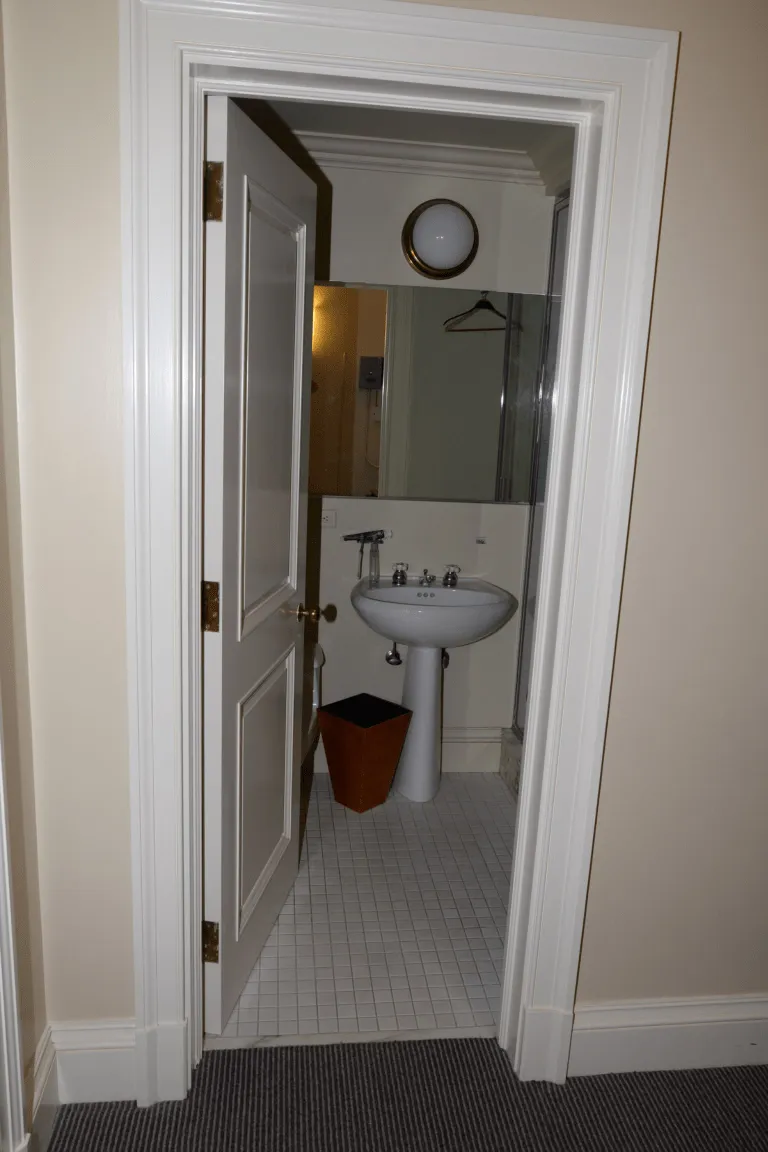
Photo: Federal Bureau of Investigation, Public domain, via Wikimedia Commons
There is a specific kind of irritation that comes from hanging a door perfectly, standing back to admire your work, and then discovering it will not open because the basin is in the way.
It happens constantly in small British homes, where a bathroom the size of a wardrobe meets a landing the width of a corridor. The door itself is fine. The direction is not. Handing and clearance are the two things that decide whether a tight room feels tight or feels broken, and both are decided before anything is screwed to a frame.
Handing, in plain English
Handing simply means which side the hinges are on. That is it. The trouble is that different manufacturers and joinery suppliers describe it from different viewpoints, so a door sold as left-handed by one merchant can be what another calls right-handed.
Ignore the label on the website. Describe it instead: hinges on the left when standing in the hallway, looking into the bathroom. That sentence cannot be misread.
If you want the textbook version, most UK joinery works from the side the door opens towards — the face you see as you walk through. Hinges on your left means left-handed. But always confirm with the seller before ordering, because getting it wrong on a made-to-measure door is an expensive way to learn about conventions.
Measure from the room you walk into
The single most common mistake is standing in the wrong place. Stand where you will be when you pull the door towards you, facing the doorway. Note which hand the hinges fall on. That is your handing.
Then do it again for every other door in the house, because plumbers, electricians and previous owners have all had a go at some point and the pattern will not be consistent. A house where three bedroom doors swing inwards and one swings out into the landing is a house with a story attached.
The clearance sum nobody does
A door does not need the width of the opening to swing. It needs the width of the leaf, plus the handle, plus a bit of breathing room, scribed as an arc from the hinge.
So a standard 762mm (2ft 6in) door with a lever handle projecting 60mm needs roughly 830mm of clear floor in the direction it opens, measured at handle height as well as at floor level. People measure the floor, forget the handle, and then discover the lever scrapes the wall.
Walk the arc. Drop a piece of string at the hinge point, hold it at the leaf width plus handle projection, and sweep it across the floor. Anything it touches — basin pedestal, radiator, bin, laundry basket, the corner of a bath — is an obstruction. Do it before ordering, not after.
Also check the height. A door swinging into a room with a low cupboard or a shelf at 900mm can clash well above floor level, which no floor-based measurement will reveal.
Four small-room problems swing causes
The bathroom basin. The classic. A door swinging inwards onto a pedestal basin leaves you entering sideways. Either reverse the swing outwards onto the landing, or switch to a slider.
The landing clash. Two doors close together, one opening out, one opening in. On a narrow landing this can make a bedroom effectively unusable at certain angles. Check every door's arc against its neighbours.
The covered radiator. A door that swings back flat against a wall is lovely until that wall has a radiator on it. Either fit a door stop to limit the swing or accept that the door will only open 80 degrees.
The hidden switch. Door opens, door covers the light switch, nobody can turn the light on from inside the room. Cheap to fix now, deeply annoying forever.
Can you just flip the door you already have?
Sometimes, and it is worth checking before you buy a replacement. A plain flush or four-panel door can often be reversed, but look for these first:
- The lock block. Internal doors have a solid timber block inside the core where the latch sits. Flipping the door does not move the block, so the latch position stays the same — usually fine, but check.
- Glazing and panels. Asymmetric glazing patterns, decorative beading or a moulded face make one side the front. Flip it and the joinery looks wrong.
- Fire door labelling. A certified FD30 door carries a plug or label that often needs to remain visible and on a specific face. Do not flip a fire door without checking the certification.
- Old hinge recesses. Flipping leaves the old recesses on what becomes the room-facing side. They need filling and finishing, and on a veneered door that is not always invisible.
You will also need to cut new hinge recesses on the opposite edge and fill the old latch mortice, which is a job for a router and a sharp chisel rather than wishful thinking.
When reversing is the wrong answer
An outward-opening bathroom door into a narrow hallway swaps one problem for another: you now block the route to the stairs every time you leave the room. In a house, there is no hard rule forcing bathroom doors to swing in, but check what the door will obstruct when open, and think about privacy and sightlines — a door opening outwards can leave the loo visible from the living room.
Never reverse a fire door forming part of a protected escape route without advice. Self-closing fire doors on a three-storey house's staircase are there for a reason, and their swing direction matters as much as their certification.
The small fixes that buy you 30mm
Before you rip anything out, try swing-clear or cranked hinges. These offset the door slightly as it opens and can gain you enough clearance to miss a skirting board or a basin corner. Rising butt hinges lift the door as it swings, which helps over uneven old floors. A slimline lever handle in place of a chunky knob can claw back 20mm on its own.
When sliding or bi-fold is genuinely better
If a room is too small for any swing at all, stop trying. A surface-mounted slider on the outside of the wall works well for bathrooms and en-suites and costs less than people expect, at the price of a little acoustic performance and some wall space for hanging. Pocket doors disappear entirely but need a cavity and a bigger project.
For cupboards and airing cupboards, bi-folds are almost always the right call — four narrow leaves projecting 250mm into the hall instead of one 600mm arc. For internal room dividers and studies that occasionally need to be closed off, a double or bi-fold set beats a single wide door that fights the furniture.
A pre-order checklist
- Stand in the room you enter, facing the doorway. Note the hinge side.
- Write the description in words, not labels: hinges left, viewed from the hall.
- Sweep the arc at floor level and at handle height.
- Check the swing against neighbouring doors, radiators and switches.
- Confirm the door is not a fire door before considering a reversal.
- Only then order — and measure the opening itself twice, because old houses are not square.
Get the direction right and a small room stops feeling like a puzzle. Get it wrong and no amount of expensive ironmongery will rescue it.