Sticks, Creaks and Second Thoughts: The First Ninety Days With a Newly Hung Door
There is a particular noise a newly hung internal door makes in an older UK home. It is not quite a creak, not quite a click, and it tends to arrive just as the central heating comes on. For a lot of homeowners, that first little sound is enough to trigger a quiet panic: was the door fitted badly, or is this just what doors do?
Usually, it is the second one. A newly hung internal door is not a static piece of furniture. It is a moving part in a building that expands, contracts and shifts with the weather. The first ninety days are less about judging the fit and more about letting the door, frame and paint settle into something like a working relationship.
The door is not being difficult — it is adjusting
Timber moves. That is the short version. A door fitted in a cool, damp October can feel very different by December, once the heating has been running for a few weeks and the indoor humidity has dropped. In a Victorian terrace, a 1930s semi or even a newer build with underfloor heating, the door and frame are responding to the same conditions your floorboards and skirting boards are.
Paint adds another layer. Water-based paints can feel tacky for several days and continue to harden for a couple of weeks. Solvent-based finishes take longer. If the door was painted before fitting, the edges may still be soft enough to stick to the frame. That is not a fitting fault; it is a curing issue, and it usually resolves with time and gentle use.
Days 1–14: leave it alone, mostly
The best thing you can do in the first fortnight is resist the urge to start sanding. A door that rubs slightly on day three may not rub at all on day twenty. Use the door normally, close it gently rather than slamming it, and keep an eye on the latch and hinges.
Do check that no paint has bridged the gap between the door edge and the frame. If it has, a careful score along the join with a sharp knife can stop the paint pulling away. Do not attack the door with sandpaper yet. Also avoid heavy cleaning products near fresh paint, and do not fit a draught seal until the finish has properly cured.
Weeks 2–6: the heating comes on
This is when most of the movement happens. As the heating settles into its winter routine, the door may shrink very slightly, which can leave a small gap at the top or a latch that needs a firmer push. You may also notice a faint rattle when the door is closed. None of that is unusual.
On the other hand, a door can swell if the room is damp or if a bathroom door is absorbing moisture. A slight rub along the latch side in a steamy bathroom is common in the colder months. Give it a few days, keep the room ventilated, and see whether it settles. If the door is catching consistently at the top corner, though, that is worth investigating sooner rather than later.
What you can safely tweak yourself
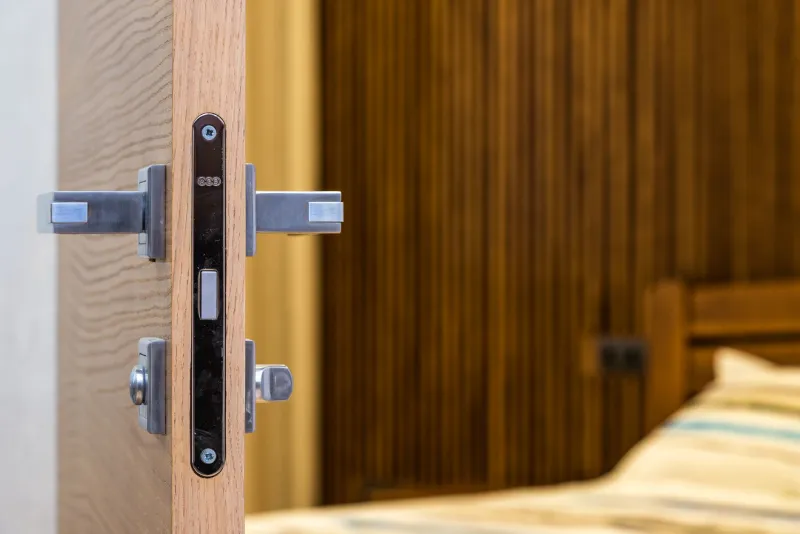
There are a few small adjustments that are well within the reach of most homeowners. Tighten any hinge screws that have worked loose — a quarter turn is often enough. If the latch is not catching cleanly, check the strike plate on the frame. Sometimes it needs a millimetre or two of movement, and a screwdriver is all it takes.
A door that swings open or closed on its own may simply be out of level, or one hinge may be sitting slightly proud. Do not start planing the door to solve a hinge problem. If the hinges look misaligned, note it and let the fitter check it. Lubricate hinges with a dry PTFE spray rather than a wet oil that will attract dust, and keep the latch mechanism clean.
Normal movement versus a fitting fault
Normal settling looks like this: a door that rubs slightly during a cold snap, a latch that needs a nudge, a tiny change in the gap at the top, or a hinge that needs a quarter-turn. These things come and go with the seasons.
A fitting fault tends to be more consistent. Look out for a door that has rubbed from day one and still rubs after the heating has been on for a fortnight. A door that will not stay closed, a latch that misses the strike plate by more than a few millimetres, hinges that bind, a visible twist in the door itself, or a frame that is clearly out of square are all worth a call to the fitter. So is any splitting around the hinge blocks or a door that catches along its full length.
When to call the fitter back
Most fitters expect a snagging period, and a good one will not mind being asked to check a door that has moved. Take photographs, note whether the problem is worse in the morning or evening, and mention the room conditions. Do not sand or plane the door first. Once you remove material, you cannot put it back, and you may turn a simple hinge adjustment into a bigger job.
If the door was fitted during a damp spell, or if the room has been plastered recently, say so. Those details help the fitter work out whether the door needs adjusting or whether the building is still drying out.
A simple 90-day checklist
In week one, keep use gentle and watch for paint bridging. By week four, check hinge screws and the latch. Around week eight, look again at the gaps as the heating has settled in. By week twelve, you should have a clear idea of whether the door is moving normally or whether something needs attention.
A newly hung door is not a finished, frozen object. It is a piece of joinery learning its room. Give it a season, make the small adjustments, and save the serious concern for problems that stay put.